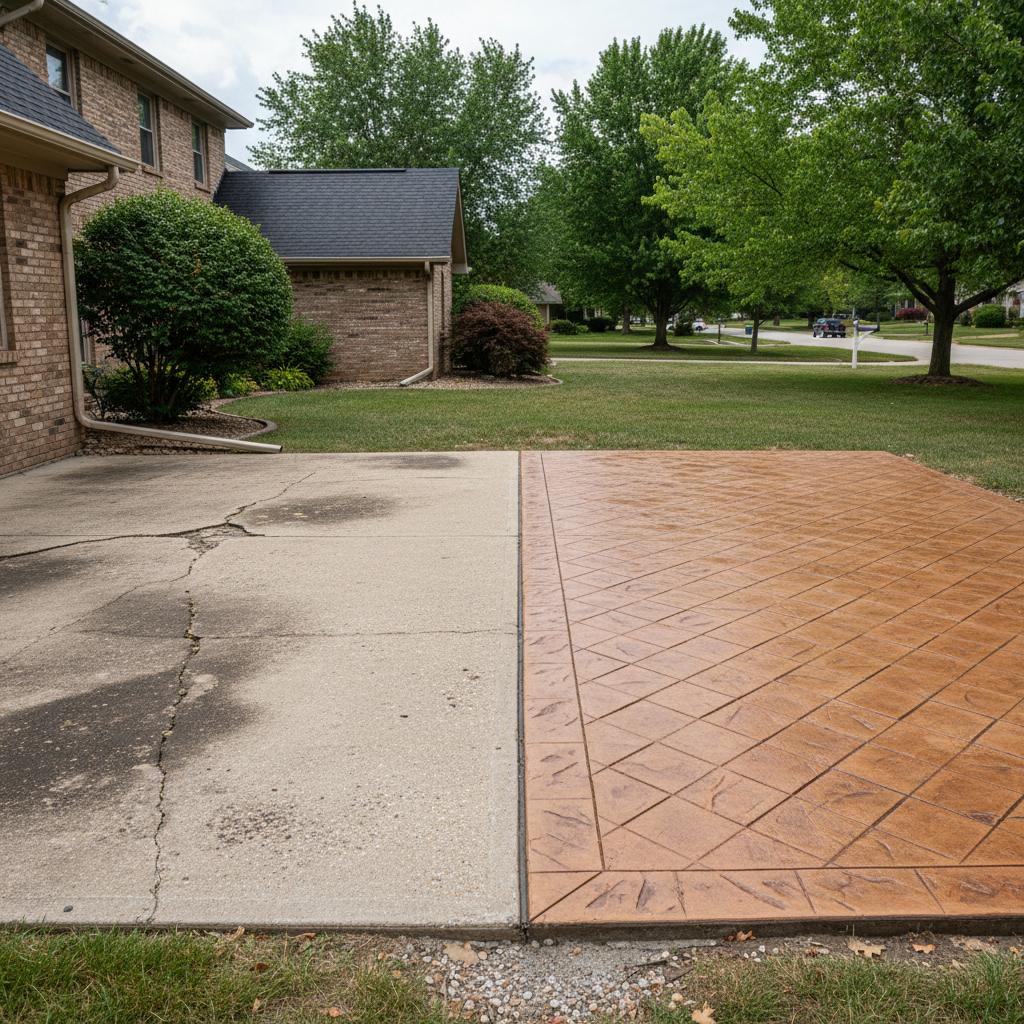
So, you're thinking about sprucing up your outdoor space with decorative concrete, huh? Good call. It's a fantastic way to add curb appeal and value to your home. But when you start looking into it, you'll quickly find there are a few different ways to go. Two of the most popular options we get asked about here at Elgin Concrete Works are stamped concrete and exposed aggregate. People often wonder which one's better, and honestly, there's no single 'better' option; it really depends on what you're looking for.
I've seen both of these installed all over Elgin, from the older homes in the near west side to the newer developments on the east side. Each has its own vibe and its own set of pros and cons, especially when you consider our crazy Illinois weather.
What's the Difference, Anyway?
Let's start with the basics. You've probably seen both of these, even if you didn't know their names.
Stamped Concrete: This is where we pour regular concrete, and while it's still wet, we press large rubber mats (stamps) into it. These mats have patterns that mimic natural materials like brick, stone, slate, or even wood. Once it sets, we often add color and a sealer to really bring out the pattern and protect it.
Exposed Aggregate: With this method, we pour concrete. Then, while it's still fresh, we wash away the top layer of cement paste to reveal the small, decorative stones (the 'aggregate') within the mix. It gives you a textured, often pebbly surface that's very natural-looking.
Cost: What's Your Budget?
Right off the bat, cost is usually a big factor for homeowners. Generally speaking, exposed aggregate tends to be a bit more budget-friendly than stamped concrete. Why? Stamped concrete involves more labor and specialized tools like those big rubber stamps, plus often multiple colors and sealers. Exposed aggregate is a bit simpler in its application. That's not to say exposed aggregate is cheap, but you'll usually see a lower price tag per square foot compared to a detailed stamped job.
Durability & Longevity: Built to Last
Both options are incredibly durable, which is one of the main reasons folks choose concrete. They're both going to stand up to our harsh Elgin winters, the freeze-thaw cycles, and the summer heat a lot better than, say, pavers that can shift over time. However, there are some subtle differences.
Stamped Concrete: When properly installed and sealed, it's tough. The main thing here is the sealer. It protects the color and the surface. If that sealer wears down or isn't reapplied every few years, the color can fade, and the surface can become more susceptible to wear. Also, if a stamp isn't perfectly done, you might get a tiny edge that could chip, though that's rare with experienced crews.
Exposed Aggregate: This stuff is like a tank. Because the surface is literally made up of small, hard stones, it's incredibly resistant to abrasion and wear. You don't have a top layer of color that can fade, and the texture itself provides excellent traction. It's less reliant on a sealer for its structural integrity, though sealing is still recommended for stain protection and to enhance the look.
Maintenance: Keeping It Looking Good
No concrete is truly maintenance-free, but some require a little more TLC than others.
Stamped Concrete: The biggest maintenance item here is resealing. You'll want to reseal it every 2-3 years, sometimes more often if it's in a high-traffic area or gets a lot of direct sun. This protects the color and keeps it looking vibrant. You'll also want to clean it regularly to prevent dirt buildup in the textured grooves.
Exposed Aggregate: This is pretty low-maintenance. A good power wash once a year usually does the trick to get rid of any grime. While sealing isn't as critical for its longevity as it is for stamped concrete, applying a sealer every few years will help prevent staining and keep the stones looking fresh and vibrant.
Appearance & Style: What's Your Vibe?
This is where personal preference really comes into play.
Stamped Concrete: Offers a huge range of design possibilities. You can mimic almost any natural material, which means you can match it perfectly to your home's existing architecture or landscaping. Want a cobblestone driveway? A flagstone patio? Stamped concrete can do it. The color options are endless too. It gives a very polished, intentional look.
Exposed Aggregate: Provides a more natural, organic, and often rustic look. It's less about mimicking other materials and more about celebrating the natural beauty of the stones themselves. It blends really well with natural landscapes and can give a very understated, elegant feel. The texture also provides excellent slip resistance, which is a big plus for pool decks or walkways, especially when things get icy around here.
My Recommendation for Elgin Homeowners
Considering our specific conditions here in Elgin – those harsh winters, the freeze-thaw cycles, and the need for durable, long-lasting solutions – I often lean towards exposed aggregate for areas where ultimate durability and low maintenance are top priorities, like driveways or very high-traffic walkways. Its natural texture also provides fantastic grip, which is a real bonus when we get ice and snow.
However, if you're looking for a specific aesthetic, want to perfectly match an existing stone feature, or desire a more intricate design for a patio or a decorative path, stamped concrete is an excellent choice. Just be prepared for that regular resealing to keep it looking its best. The key is to make sure whoever's doing the work understands how to properly prepare the base and apply the concrete and sealer to withstand our local climate.
Ultimately, both are solid choices. Think about your budget, how much maintenance you're willing to do, and the look you're going for. If you're still on the fence, give us a call at Elgin Concrete Works. We can walk you through some samples and help you figure out which option will make your home shine.