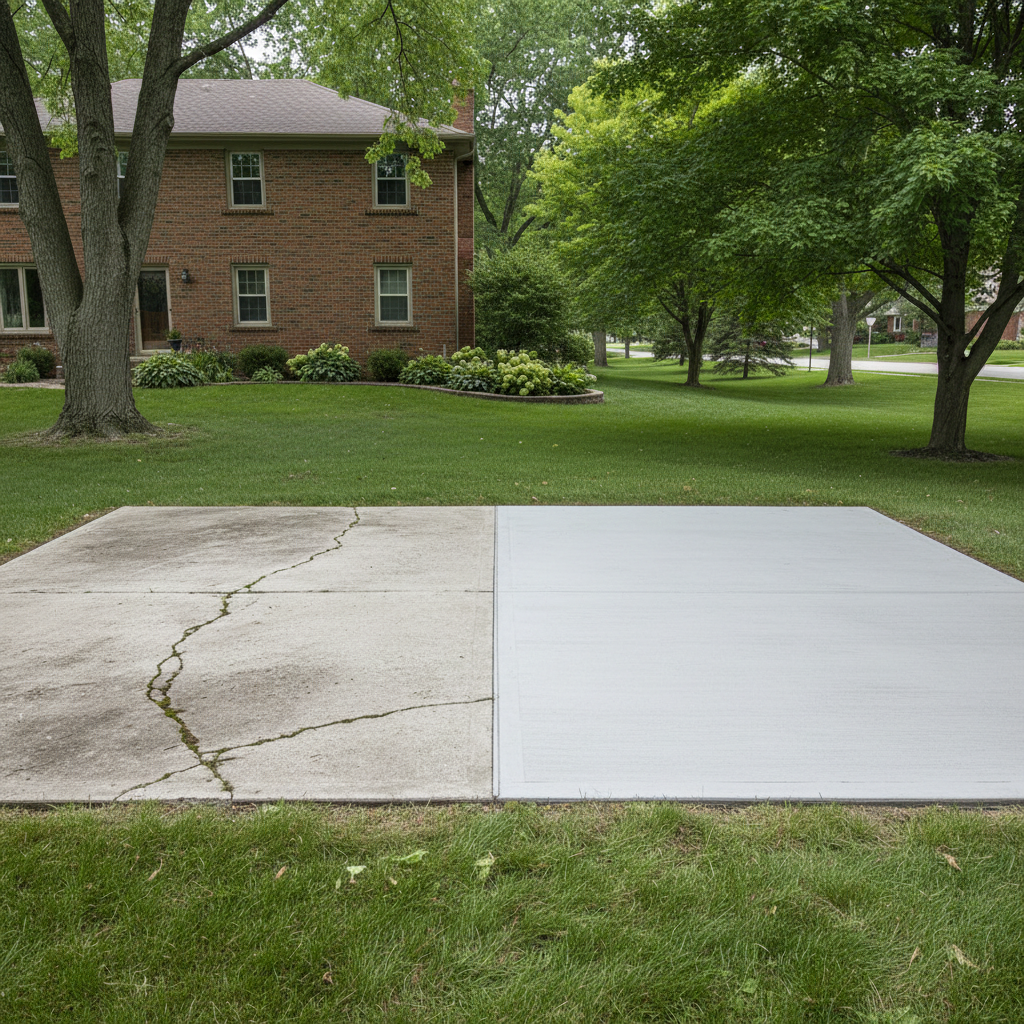
Slab Jacking vs. Tear-Out: What's the Deal?
Your driveway's got a dip. Maybe your patio's leaning a bit. Or perhaps that sidewalk leading up to your front door has become a real trip hazard. If you're noticing concrete sinking or settling, you've essentially got two main ways to fix it: slab jacking (sometimes called concrete lifting or mudjacking/polyjacking) or just ripping it all out and pouring new concrete. I see this problem constantly here in Elgin, especially with our clay soils and those brutal freeze-thaw cycles we get every winter. So, which one makes sense for you?
The Quick Fix: Slab Jacking (Mudjacking/Polyjacking)
Slab jacking is pretty straightforward: it's about raising your existing concrete back up to where it belongs. How we do it depends on the material. With mudjacking, we drill small holes in the concrete and then pump a cement-based slurry underneath. This fills any empty spaces and gently lifts the slab. Polyjacking is similar, but we use a high-density polyurethane foam instead. Both methods are quite fast, often done in a day.
Cost
This is usually where slab jacking really shines. It's almost always way cheaper than tearing everything out and replacing it. You're paying for materials and labor to lift, not to demo, haul away, and then pour all new stuff. We're talking potentially half the cost, sometimes even less, depending on how big the job is.
Durability
When it's done right, slab jacking can last for years. The whole point is to fill those voids that caused the sinking in the first place. Now, if the underlying soil issues aren't completely resolved, or if you've got some serious drainage problems, it *could* settle again. But for most cases of minor to moderate settling, it's a very durable solution. Polyurethane foam, in particular, is waterproof and won't erode, which is a big plus, isn't it?
Maintenance
Once we've lifted it, there's not much special maintenance you need to do beyond what you'd normally do for concrete. Just keep an eye on drainage around the area to prevent future erosion, but that's good practice anyway.
Appearance
The holes we drill for injection are small, usually about an inch across, and we patch them up when we're done. You'll see the patches, sure, but they're not too noticeable. The main benefit is that your existing concrete slab is now level again, so you avoid that patchwork look of a partial replacement or the much higher cost of a full one.
The Full Reset: Tear Out and Replace
This option is exactly what it sounds like. We bust up the old, sunken concrete, haul it away, get the sub-base ready, and then pour a brand new slab.
Cost
This is generally the more expensive route. You're paying for demolition, disposal, all new materials, and new labor for pouring and finishing. It's a bigger project, and the price definitely reflects that.
Durability
If the sub-base is properly prepared (compacted well, good drainage), a new concrete slab can be incredibly durable. You're starting fresh, which gives you the chance to really address any underlying soil issues thoroughly before the new pour. A new slab, properly installed by a company like Elgin Concrete Works, should last for decades.
Maintenance
New concrete, like any concrete, benefits from proper sealing to protect it from our Illinois weather, especially salt and de-icers. Beyond that, it's pretty low maintenance.
Appearance
This is where tear-out and replacement often wins out aesthetically. You get a completely fresh, smooth, unblemished surface. No patches, no old cracks (unless you get new ones, which, let's be honest, can happen). It looks brand new because it is.
So, Which One Should You Choose for Your Elgin Home?
Look, if your concrete is just a little bit out of whack, say a few inches down, and generally in good shape otherwise (not crumbling, not severely cracked all over), slab jacking is often the smarter choice. It's faster, less disruptive, and saves you money. It's a great option for driveways, patios, and sidewalks that have settled but are still structurally sound.
However, if your concrete is severely cracked, crumbling, spalling badly, or if the settling is extreme and points to a much deeper structural problem with the sub-base that just can't be fixed by lifting, then tearing it out and replacing it is probably the way to go. You really don't want to lift a slab that's already falling apart, do you? Sometimes, especially with older homes in areas like the near west side of Elgin, the original concrete just wasn't put in with today's best practices, and it's simply time for a fresh start.
My recommendation? Get an expert to look at it. We can tell pretty quickly if your concrete is a good candidate for lifting or if you're better off with a full replacement. We'll give you an honest assessment and help you weigh the pros and cons for your specific situation. Don't just live with that trip hazard; get it fixed right.