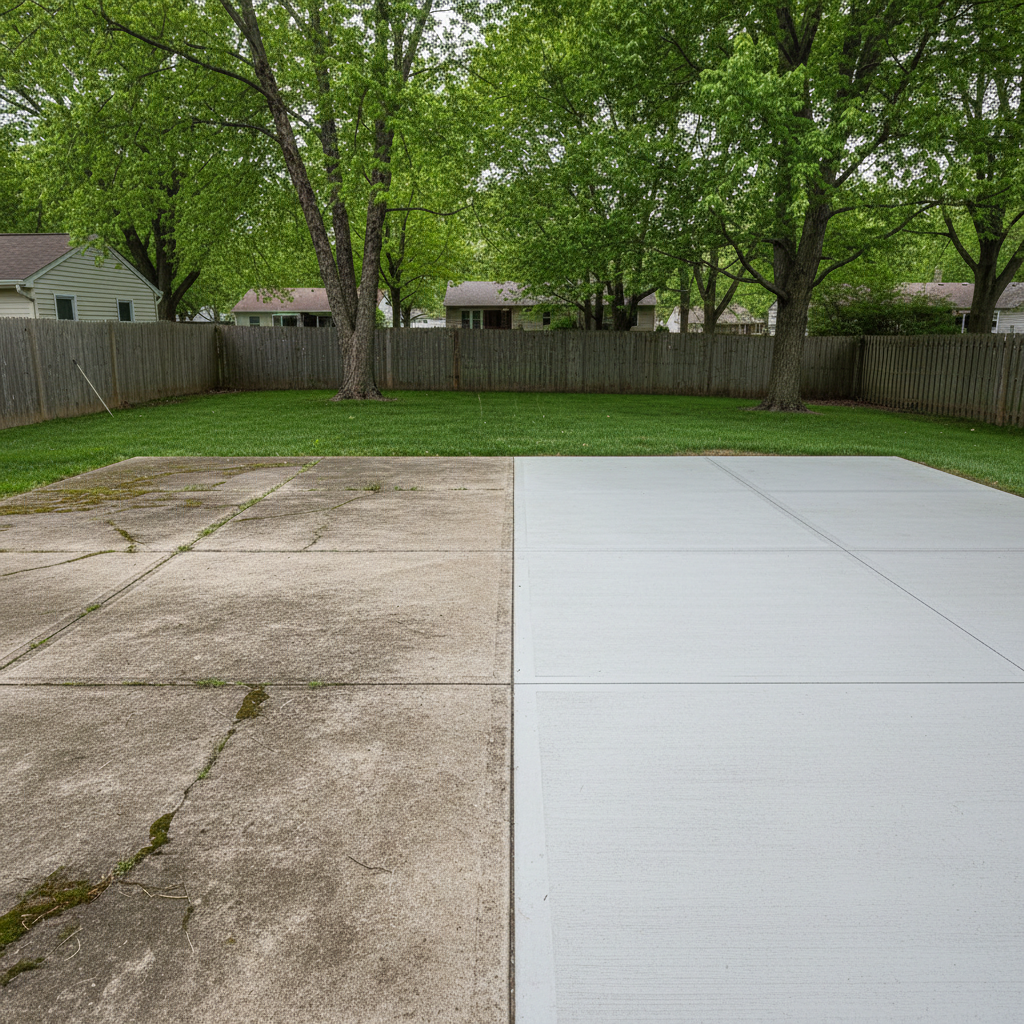
Alright, so you're thinking about a new patio for your backyard here in Elgin. Good call! A patio adds a ton of usable space and really ups your outdoor living game. But then the big question hits, doesn't it? Do you go with a classic poured concrete slab, or do you look at those interlocking pavers? It's a common dilemma, and I've seen both done well—and not so well—around neighborhoods like Lords Park and down by the river.
Let's get straight to it and compare these two head-to-head. I'll tell you what I know from years of working with both.
Cost: What's Your Wallet Saying?
This is usually the first thing folks ask about, and that's fair. Generally speaking, a standard poured concrete patio will be less expensive upfront than a paver patio. You're looking at fewer labor hours for installation, and the material itself is typically cheaper per square foot. We pour it, we finish it, and we're done. It's a pretty straightforward process.
Pavers, on the other hand, involve more steps. You've got the excavation, the base prep (which is super important for pavers, by the way), laying each individual paver, cutting them to fit, and then sweeping in the joint sand. All that extra labor and the cost of the pavers themselves add up. So, if budget is your absolute top priority and you need to keep initial costs down, poured concrete usually wins that round.
Durability & Longevity: Built to Last?
Both options can last a long time if installed correctly. A well-poured concrete patio, with proper rebar or wire mesh reinforcement and control joints, can easily give you 20-30 years of service. The key is that proper installation. Here in Illinois, with our freeze-thaw cycles, you absolutely need a good, stable base underneath that concrete. If it's not prepped right, you'll see cracks and shifting over time, no matter how good the concrete mix is.
Pavers are also incredibly durable. Because they're individual units, they have a bit more flexibility. If the ground shifts a little (which it does here in Elgin, especially with our clay soils), the pavers can move with it without necessarily cracking. If one paver gets damaged, you can usually pull it out and replace just that one. With concrete, a crack means either patching (which rarely looks great) or a full tear-out and re-pour.
However, pavers rely heavily on that base. If the base isn't compacted perfectly or drains poorly, you can get settling, dips, and uneven spots. You also have to deal with weeds trying to grow up through the joints, which isn't a problem with a solid concrete slab.
Maintenance: Who Wants to Work?
This is where the differences really start to show. A poured concrete patio is pretty low maintenance. You'll want to seal it every few years to protect it from stains and extend its life, and maybe power wash it once a year to keep it clean. That's about it. If you get a crack, you might need to fill it, but otherwise, it's a pretty hands-off surface.
Pavers require a bit more attention. Remember those joints I mentioned? Weeds love those. You'll be pulling weeds or treating them periodically. You'll also need to re-sweep polymeric sand into the joints every few years, especially after a harsh winter or heavy rain, to keep them stable and prevent weed growth. Pavers can also settle unevenly over time, which might mean lifting and re-leveling sections. They can also get moss or mildew in the joints, requiring more frequent cleaning.
Appearance & Design Options: What's Your Style?
This is where pavers really shine for a lot of people. You can find pavers in a huge variety of shapes, sizes, colors, and textures. You can create intricate patterns, borders, and designs that just aren't possible with a single poured slab. If you're going for a specific aesthetic—maybe something rustic, European, or very modern—pavers give you a lot of flexibility.
Poured concrete used to be just, well, gray. But that's changed a lot! At Elgin Concrete Works, we can do colored concrete, exposed aggregate finishes, or even stamped concrete to mimic the look of stone, brick, or wood. So, you've got more options than just plain gray now. Even with stamping, though, you're still working with a monolithic slab, which has a different feel than individual pavers.
My Recommendation for Elgin Homeowners
Okay, so after all that, what's my take? For most homeowners in Elgin, if you're looking for the best bang for your buck, the easiest maintenance, and a solid, reliable surface that will last for decades, I'd lean towards a poured concrete patio.
Why? Our Illinois weather is tough. The freeze-thaw cycles are brutal on everything. A properly installed concrete slab, with the right base and control joints, handles that better with less ongoing fuss than pavers. You don't have to worry about weeds, shifting individual units, or constantly replenishing joint sand. You seal it, you clean it, and you enjoy it.
Now, if you have a bigger budget, really want that intricate, custom look, and don't mind the extra maintenance, then pavers can be a beautiful choice. They definitely have their place. But for a practical, durable, and low-stress patio that stands up to our local conditions, poured concrete is often the smarter, more economical long-term choice for most folks around here.
Ultimately, it's your yard and your decision. But hopefully, this helps you weigh the pros and cons a bit better. Give us a call if you want to talk through your specific project.