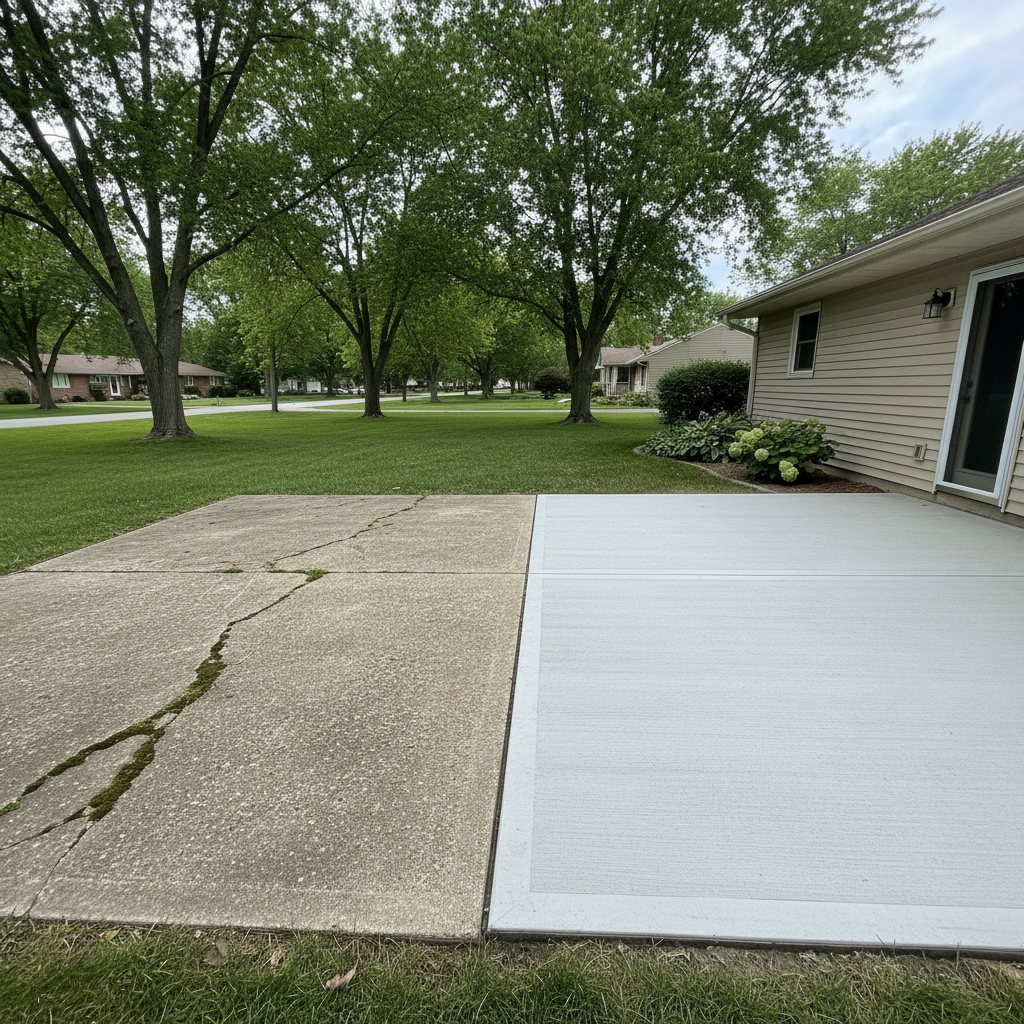
Homeowners in Elgin often wonder whether to pour a concrete slab or install interlocking pavers for their backyard project. Residents from Lord's Park to the newer construction on the west side ask this question very often. Every homeowner wants to know what material will survive another brutal Illinois freeze-thaw cycle without breaking the budget or creating a tripping hazard.
The Real Cost Breakdown
Cost is usually where the conversation starts for concrete flatwork and paver installation. Poured concrete generally costs less upfront than a quality paver installation. With concrete, homeowners pay for materials, grading, and labor to pour and finish the slab in 1 to 2 days. Pavers require a different approach because every single brick or stone must be hand-laid, leveled, and cut to fit. That means labor costs will use up a bigger portion of the project budget.
Initial pricing is important, but long-term maintenance also matters. Pavers cost more upfront, but if a tree root pushes up a section 10 years from now, those pavers can be pulled up, the base can be fixed, and the pavers can be laid right back down. If a poured concrete slab cracks or shifts significantly because of the local clay soil expanding and contracting, fixing it usually means breaking out the concrete and starting over.
How They Handle Elgin Weather
The weather in Elgin, IL includes harsh winters where snow, ice, and salt take a massive toll on outdoor surfaces. Poured concrete is smooth, which means water cannot easily seep underneath unless a crack forms. Once salt gets into minor surface pores, or a freeze hits water trapped in a hairline crack, spalling happens. Elgin Concrete Works uses the right mix design and reinforcement to fight back against this damage, but local weather conditions are very tough.
Pavers feature joints filled with polymeric sand. Those joints flex a tiny bit when the ground moves. That flexibility helps prevent major cracking, but if the polymeric sand washes out over a few seasons, weeds start growing in the gaps. Homeowners spend part of their summer weekends spraying weeds or sweeping in fresh sand.
Appearance and Maintenance Over Time
Poured concrete provides a clean, modern look for any property. Concrete can be broomed for grip, stamped to look like stone, or stained an earthy tone. Maintenance is straightforward: wash the surface off in the spring and seal it every 2 to 3 years to keep salt from damaging the material.
Pavers win on sheer design variety. Homeowners get endless patterns, colors, and textures right from the start. However, pavers require more ongoing attention. Besides managing weeds in the joints, homeowners must watch out for settling. If the base is not compacted to absolute perfection—and dealing with the heavy clay in Elgin requires serious compaction—the yard will end up with low spots where puddles form every time it rains.
Our Recommendation for Local Yards
For a low-maintenance surface that handles snow shoveling easily and stays solid year after year, poured concrete is a very good choice. Concrete is clean, durable, and handles daily use without constant fussing. Homeowners with a flexible budget who love the rustic look of individual stones can choose pavers, but they must be ready to perform routine maintenance down the road. Either way, proper base preparation is critical, because in Kane County, the performance of any hardscape depends entirely on what is hiding underneath.