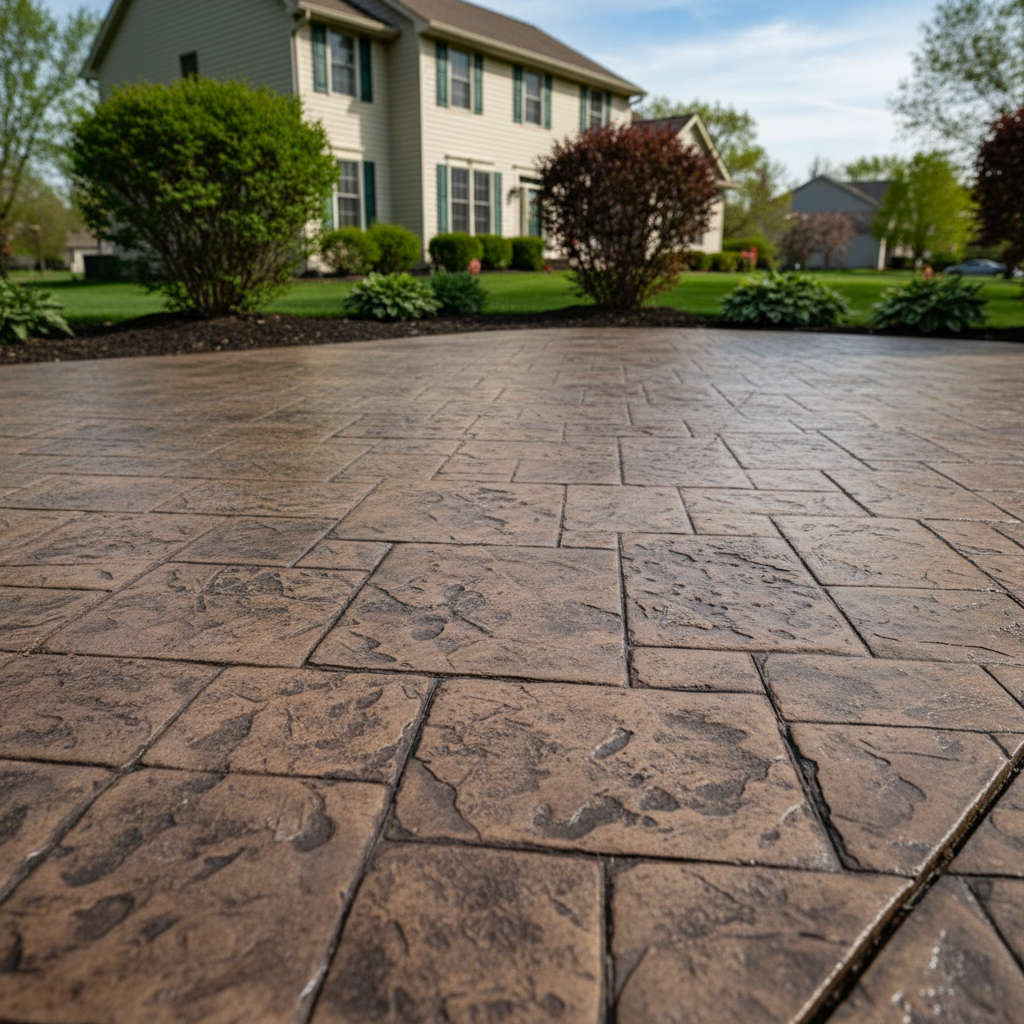
Alright, let's talk about stamped concrete for a minute. You probably picked it for good reasons, right? It just looks fantastic, whether it's giving your patio that natural stone feel or adding a real touch of class to your walkways. But, just like anything else around your place here in Elgin, it needs a little care to keep looking its best. Our Illinois climate, with its wild temperature swings and those brutal freeze-thaw cycles, is no joke on concrete. Honestly, I've seen a lot of stamped concrete jobs over the years, some great and some, well, not so great. And I can tell you, proper maintenance is really the key to making it last and keeping it sharp.
Making Your Stamped Concrete Last Longer
The most important thing you can do to protect your stamped concrete is to keep it sealed. Think of that sealer as its own personal sunscreen and raincoat, all rolled into one handy product. It guards against UV rays that can fade the color, and it also creates a barrier against moisture and stains. Here in Elgin, where we get everything from scorching hot summers to really brutal winters, that sealer is certainly working overtime.
- Seal it properly, and often enough: When your stamped concrete was first put in, it should have gotten a good seal. For most outdoor stamped concrete surfaces here in Illinois, you'll generally need to reseal it every 2 to 3 years. If it's an area that sees a lot of foot traffic, like a busy walkway or your driveway, you might even need to do it more often — maybe every 1-2 years. How can you tell if it's time? Pour a little water on it. If the water soaks in and darkens the concrete right away, your sealer is probably worn out. If it beads up nicely, you're still good to go.
- Clean it before you seal it: You can't just put new sealer on top of dirt, that's just common sense. First, sweep off any loose debris, then give it a good wash with some mild detergent and water. For those tougher spots, a concrete cleaner can help. Just make sure to rinse it really well so you don't leave any residue behind.
- Winter care is really important: This is where Illinois truly puts your concrete to the test. Avoid using de-icing salts. Seriously, they are terrible for stamped concrete and can cause surface damage like scaling and pitting. If you need some traction, use sand instead. And when you're shoveling snow, always use a plastic shovel, not a metal one, to avoid scratching or chipping the surface.
Simple Maintenance You Can Do Yourself
Beyond sealing, there are some pretty simple things you can do regularly to keep your stamped concrete looking its absolute best:
- Sweep and rinse it: Just like any outdoor surface, dirt, leaves, and other bits can build up. A quick sweep and an occasional rinse with a garden hose will stop grime from accumulating and keep your concrete looking fresh.
- Deal with stains quickly: If you spill something, clean it up as fast as you can. The longer a stain sits, the harder it is to get rid of. Mild soap and water often do the trick for most general spills.
- Watch for efflorescence: Sometimes you'll notice a white, powdery residue on the surface. That's efflorescence, which is basically mineral salts coming up from inside the concrete. It's usually harmless to the concrete itself, but it can look a bit unsightly. Often, it'll wear off on its own, but a mild acid rinse can help in stubborn cases. Just be careful, especially if you have sprinklers with hard water, as those can leave similar white stains that can damage the sealer over time.
Signs That Point to Problems
Keep an eye out for these red flags. Catching them early can save you a lot of trouble and money down the road:
- Fading color or dullness: If your once vibrant stamped concrete starts looking washed out, it's a pretty clear sign your sealer is failing, and it's definitely time for a new coat.
- Cracks: Hairline cracks can happen, especially with our freeze-thaw cycles. But if they start getting wider, or you see new, larger cracks forming, that's a bigger concern. Cracks can also be caused by ground movement or if the installation wasn't done quite right.
- Spalling or flaking: This is when the surface of the concrete starts to chip, peel, or flake off. It's often caused by freeze-thaw cycles, de-icing salts, or a poor installation. If you see the aggregate (the small stones) exposed, that's a definite sign of spalling.
- Uneven surfaces or sinking: If parts of your stamped concrete patio or walkway start to sink or become uneven, it usually means there are issues with the sub-base underneath. This can happen because of our clay-rich soils expanding and contracting, water erosion, or even frost heave.
When It's Time to Call a Professional
While some maintenance tasks are pretty DIY-friendly, there are times you absolutely need to call in the pros. Don't wait until a small problem turns into a huge, expensive repair, which happens more than you'd think.
- Significant cracking or structural damage: If you have cracks that are wider than a credit card, or if you see signs of your concrete heaving or settling, especially in areas like your driveway near the Fox River where groundwater levels can be high, it's time to call us. We can figure out if it's a simple crack repair or if there's an underlying issue like soil movement or frost heave that needs to be addressed.
- Widespread spalling or surface deterioration: If a large area of your stamped concrete is flaking or pitting, it probably needs more than just a new coat of sealer. We can evaluate if it needs resurfacing or if the damage is deep enough to warrant a full replacement.
- Sealer failure or hazing: Sometimes a sealer can fail too soon, leaving a hazy or blotchy look. This often means stripping the old sealer and putting on a new one, which is a job best left to experienced hands.
- Color restoration: If your stamped concrete has really faded and you want to bring back its original vibrancy, we can often clean, re-color, and reseal it to make it look new again.
Look, your stamped concrete is a real investment in your home. And with our crazy weather here in Elgin, from the deep freezes to the hot, humid summers, it takes a beating. Honestly, a little preventative care goes a long, long way. If you're ever unsure about the condition of your stamped concrete, or if you see any of those warning signs, don't hesitate to give Elgin Concrete Works a call. We're your neighbors, and we're here to help you keep your concrete looking great for years to come.