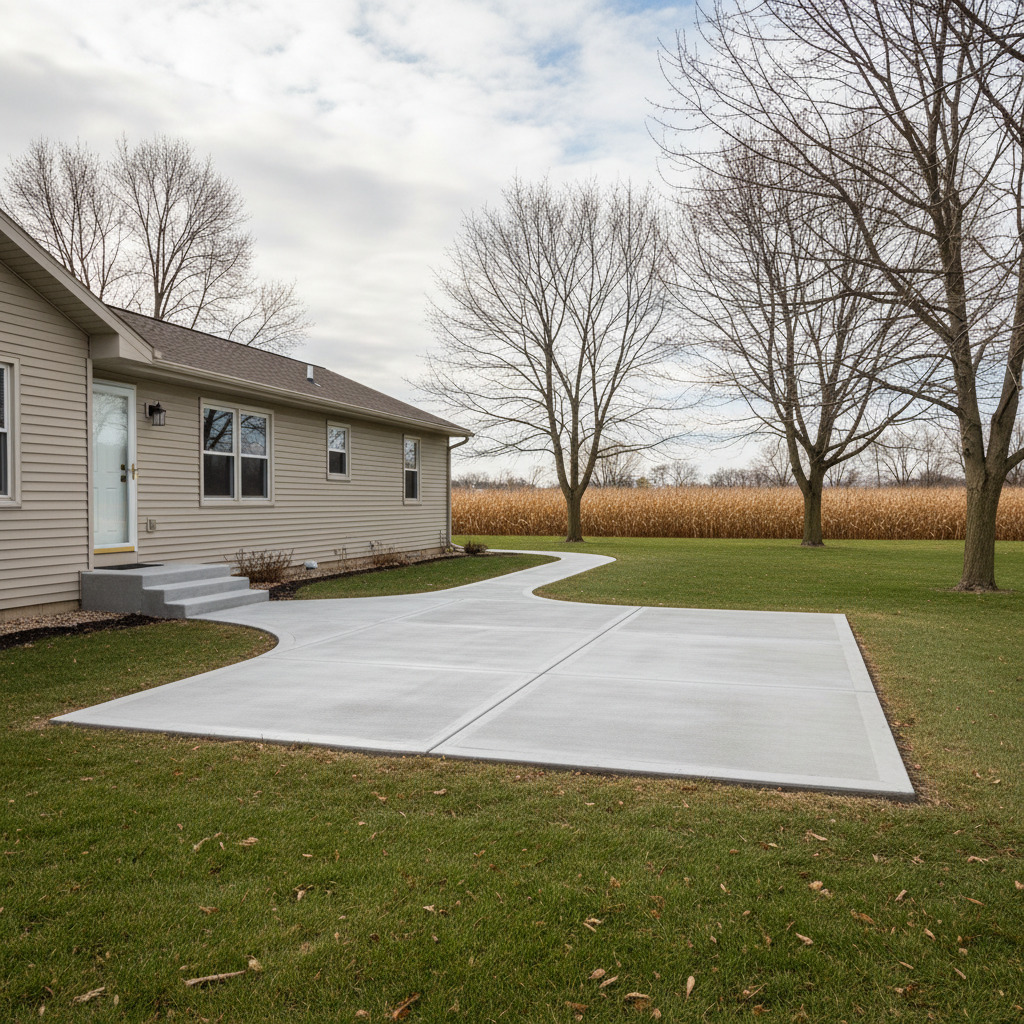
Thinking about a new driveway, patio, or even a simple walkway for your Elgin home? That's fantastic! But before you jump right into it, let's chat about timing. Here in northern Illinois, our weather is, well, let's just say it's not exactly predictable. And that unpredictability really affects how your concrete turns out and how long it sticks around. You can't just pour concrete whenever the mood strikes and expect top-notch results; there's definitely a science to it.
When's the Best Time to Pour Concrete in Elgin?
Honestly, spring and fall are usually your best bets around here. We're talking late April through June, and then again from September into early November. Why those specific windows? It all boils down to temperature, plain and simple.
Concrete needs to cure correctly, and that whole process is super sensitive to heat and cold. Ideal temperatures for pouring and curing generally fall between 50°F and 80°F. This range lets the concrete gain strength steadily. It won't dry out too fast, nor will it freeze before it gets strong enough.
- Spring (Late April - June): The ground's finally thawed, and temperatures are usually pretty mild. You get good curing conditions without the scorching heat of summer. Just keep an eye out for those sudden spring downpours; we absolutely can't pour concrete in heavy rain.
- Fall (September - Early November): This season is a lot like spring – you get those nice, moderate temperatures. The ground has also had all summer to dry out, which is a real plus. The main thing to watch for here are the overnight lows. You certainly don't want a hard freeze right after we've poured.
What Weather Conditions Affect Concrete Work?
It's not just about the temperature, you know. A few other things can really mess with a concrete job if you're not careful.
- Extreme Heat: Pouring concrete when it's super hot (like those 90°F+ days in July and August) can make it dry way too quickly. This often leads to cracking, a weaker surface, and a whole bunch of problems down the road. We can take some precautions, sure, things like misting or using special admixtures, but it's always a bigger gamble.
- Freezing Temperatures: This is a definite no-go. If concrete freezes before it hits a certain strength, it loses a huge chunk of its structural integrity. It'll spall, crack, and basically just fall apart. That's why you won't see us doing much pouring in December, January, or February, unless it's an indoor job.
- Rain: You simply cannot pour concrete in the rain. Period. It dilutes the mix, weakens the surface, and can even wash away the cement paste. A light drizzle? Maybe we can manage with covers, but anything more means we're rescheduling.
- Wind: Strong winds can dry out the surface of the concrete too quickly, even on a moderately warm day. This can cause what we call plastic shrinkage cracking. We've actually seen it happen even on a perfectly nice day, especially near those open fields out by Randall Road.
Protecting Your Concrete Investment Year-Round
Once your concrete is in, you want it to last, right? Especially with our freeze-thaw cycles here in Elgin. Here are a few tips for year-round protection.
First off, sealing is absolutely crucial. I cannot stress this enough. A good quality penetrating sealer will protect your concrete from moisture absorption, which is the main culprit behind spalling and cracking. That happens when water freezes and expands in the concrete's pores. We usually recommend sealing new concrete about 30 days after it's poured, and then re-sealing every 2-3 years after that, depending on how much traffic it gets and how exposed it is to the elements.
Next, be really careful with de-icing chemicals. Many common de-icers, especially those containing ammonium nitrates or sulfates, can seriously damage concrete. Look for de-icers labeled