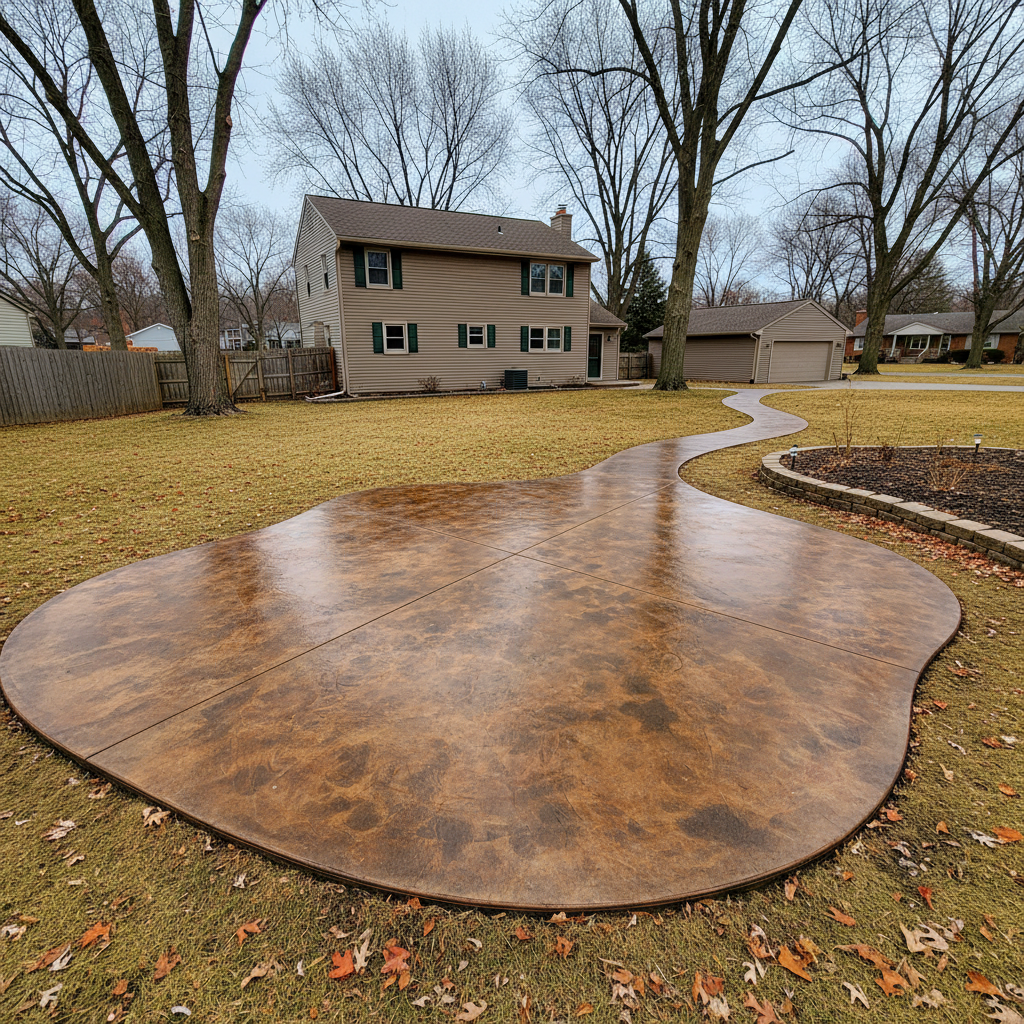
You've got concrete, maybe it's a patio, a driveway, or even an interior floor. You're thinking about staining it to give it some real character, a pop of color, or just a more finished look. That's a smart move. Staining can really transform a space, but if you're in Elgin, you can't just pick any random weekend to get it done. Our weather here, especially with those wild swings we get, plays a huge role in how well that stain takes and how long it lasts.
When's the Best Time to Stain Concrete in Elgin?
Honestly, it boils down to temperature and moisture. You want a sweet spot, usually in the spring or early fall. I'm talking about consistent daytime temperatures between 50 and 80 degrees Fahrenheit. Nighttime lows shouldn't dip below 40-45 degrees for at least 24-48 hours after application, especially for acid stains that need time to react. If it's too hot, the stain can dry too fast, leading to an uneven finish or not penetrating properly. Too cold, and it won't react or cure right, leaving you with a weak, splotchy mess.
Spring, after the last frost usually in late April or May, is often ideal. The ground has had a chance to warm up, and we're usually past the heavy, constant rain. Early fall, say September or early October, is another good window. The summer heat has broken, but we're not yet into the deep freezes. You'll want to avoid the peak of summer here – those 90-degree days with high humidity? Not great for concrete staining. The concrete itself gets super hot, and the stain can flash dry. Same goes for those unpredictable March days where it's 60 one day and snowing the next. Patience is key.
Weather Conditions That Can Ruin Your Staining Project
Beyond just temperature, you've got to watch out for a few other things:
- Rain: This is a big one. You need at least 24-48 hours of dry weather before you start, and ideally, another 24-48 hours after. If rain is in the forecast, just hold off. Stains, especially water-based ones, can be washed away or diluted, leading to streaks and an uneven look. Acid stains need to react with the concrete, and excess moisture can interfere with that chemical process.
- High Humidity: While not as critical as rain, very high humidity can slow down drying and curing times. This isn't usually a deal-breaker, but it means you need to adjust your expectations for how quickly things will set.
- Wind: A little breeze is fine, it helps with drying. But strong winds? They can blow dust and debris onto your freshly stained surface, or worse, cause the stain to dry too quickly in certain areas, leading to an inconsistent finish. Plus, it can make applying the stain evenly a real pain.
- Direct Sunlight: If you're staining an outdoor patio that bakes in the afternoon sun, you might want to schedule the work for early morning or late afternoon, or even better, on an overcast day. Direct sun can cause the stain to dry too quickly, preventing proper penetration and reaction.
We've stained plenty of patios in the older parts of Elgin, like the Victorian District, where the concrete has seen a lot of years and weather. Getting the surface prepped right and choosing the right day makes all the difference for those older slabs.
Protecting Your Stained Concrete Year-Round
So, you've got your beautiful new stained concrete. Now what? You've invested in this, and you want it to last, especially with our Illinois winters. Here's how you protect that investment:
- Seal It: This is non-negotiable. After the stain has fully cured (usually a few days), you need to apply a high-quality sealer. This protects the stain from UV rays, abrasion, and moisture. For outdoor concrete, I always recommend a penetrating sealer for durability against freeze-thaw cycles, topped with a film-forming sealer for added protection and a desired finish (matte, satin, or gloss).
- Clean Regularly: Don't let dirt, leaves, or other debris sit on the surface for too long. A simple sweep and occasional rinse with water is usually enough. For tougher spots, use a mild, pH-neutral cleaner. Avoid harsh chemicals, especially anything with bleach or ammonia, as they can degrade the sealer and even the stain itself.
- Watch for Spills: Oil, grease, and other chemicals can penetrate the sealer and stain the concrete if left for too long. Clean them up quickly.
- Winter Care: This is where Elgin Concrete Works really sees the difference. Our winters are brutal. Avoid using de-icing salts on your stained concrete. Most salts, especially rock salt, are corrosive and can eat away at the sealer and even the concrete itself, leading to spalling and discoloration. Use sand for traction instead, or a concrete-safe de-icer if you absolutely must. Snow shovels with metal blades can scratch the sealer, so opt for plastic ones.
- Re-seal Periodically: Sealers aren't forever. Depending on traffic and exposure, you'll need to re-seal your concrete every 2-5 years. You'll know it's time when water no longer beads up on the surface.
Taking these steps will ensure your stained concrete looks fantastic for years to come, no matter what our Elgin weather throws at it. It's all about smart timing and consistent care.