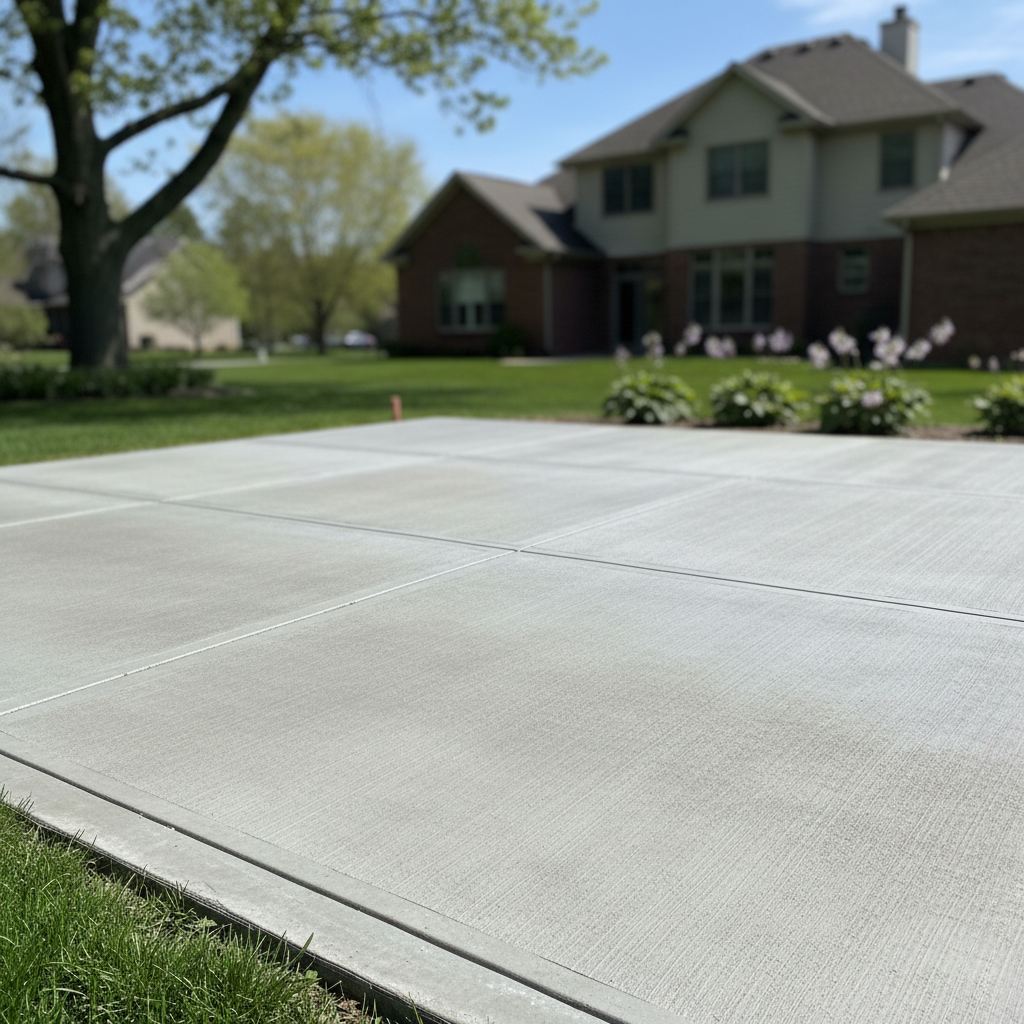
What's the difference between concrete and cement?
This is a big one, honestly. I hear it all the time: folks use 'cement' and 'concrete' like they're the same thing, but they're really not. Think of it like this: cement is an ingredient, but concrete? That's the finished dish. Cement is that fine, powdery stuff – usually Portland cement – which acts as the binder. You mix it with water, then add aggregates like sand and gravel, and sometimes other admixtures. *That's* what makes concrete. So, you don't pour a cement driveway; you pour a concrete driveway. Simple, right?
How long will my new concrete flatwork last?
A properly installed concrete driveway, sidewalk, or patio should really go the distance for you, easily 20 to 30 years, sometimes even more. But "properly installed" is the key phrase there. That means good sub-base preparation, the right mix design for our Illinois climate, proper placement, and most importantly, correct curing. If someone cuts corners anywhere along that process, you'll definitely see issues much sooner. Things like freeze-thaw cycles, especially with our harsh Elgin winters, can really beat up concrete if it's not done right. Oh, and regular sealing? That can extend its life significantly.
Do I need rebar or wire mesh in my concrete?
Short answer: yes, almost always for flatwork. For driveways, patios, and sidewalks, reinforcement is crucial. It's not there to prevent cracks entirely – concrete cracks, it's just what it does – but it helps hold those cracks tightly together, stopping them from opening up and becoming structural problems. Wire mesh (often called welded wire fabric) is common for lighter-duty applications, while rebar (reinforcing bar) gives more serious structural integrity, especially for driveways that see heavy vehicle traffic. We always assess the specific project to figure out the best reinforcement for your needs here at Elgin Concrete Works.
Why does my concrete crack, and what can I do about it?
Like I just said, concrete cracks. It's a natural part of the curing process as the water evaporates and the material shrinks. Temperature changes, ground movement, heavy loads – all these things contribute. The goal isn't to prevent all cracks, but to control where they happen. That's where control joints come in handy. We saw or tool grooves into the fresh concrete, which are essentially pre-planned weak spots. The concrete is supposed to crack along those lines, keeping them neat and less noticeable. If you see random, wide cracks, that's often a sign of poor joint placement, an inadequate sub-base, or improper curing.
How long before I can drive or walk on new concrete?
Patience is a virtue when it comes to new concrete! For walking on it, you can usually do that after 24-48 hours. It's strong enough to bear foot traffic by then. But for driving a car on it, you really need to wait longer. I tell folks to wait at least 7 days, and ideally 28 days for full strength. Concrete gains most of its strength in the first week, but it keeps curing and hardening for a full month. Putting heavy loads on it too soon can compromise its long-term durability and lead to premature cracking or spalling. It's tempting to use it right away, but trust me, waiting pays off.
What's the deal with concrete sealing? Do I really need it?
Absolutely, you need it. Think of concrete sealer like sunscreen for your skin, or a topcoat for your car's paint. It's a protective barrier. For us here in Elgin, with our wild temperature swings, heavy snow, and the salt and de-icers used on roads, sealing is non-negotiable. It helps protect against moisture penetration (which causes freeze-thaw damage), chemical attack from de-icers, oil stains, and general wear and tear. You should plan on resealing your concrete every 2-5 years, depending on the type of sealer and how much abuse it takes. It's a small investment that dramatically extends the life and appearance of your flatwork.
My old concrete is sinking or uneven. Can it be fixed without replacing it?
Sometimes, yes! If your concrete slab, driveway, or patio has sunk or become uneven, it's often because of issues with the soil underneath. Maybe there was poor compaction during installation, or erosion has washed away some of the sub-base. In many cases, you don't need to rip out and replace the whole thing. We can often use a process called concrete lifting, or 'mudjacking' (though we use modern polyurethane foam now). We drill small holes in the concrete and inject material underneath to lift it back to its original position. It's quicker, less messy, and usually more affordable than full replacement, especially for things like garage floors or larger patio sections in older neighborhoods where the ground might have settled over decades.